
- All
- Product Name
- Product Keyword
- Product Model
- Product Summary
- Product Description
- Multi Field Search
English


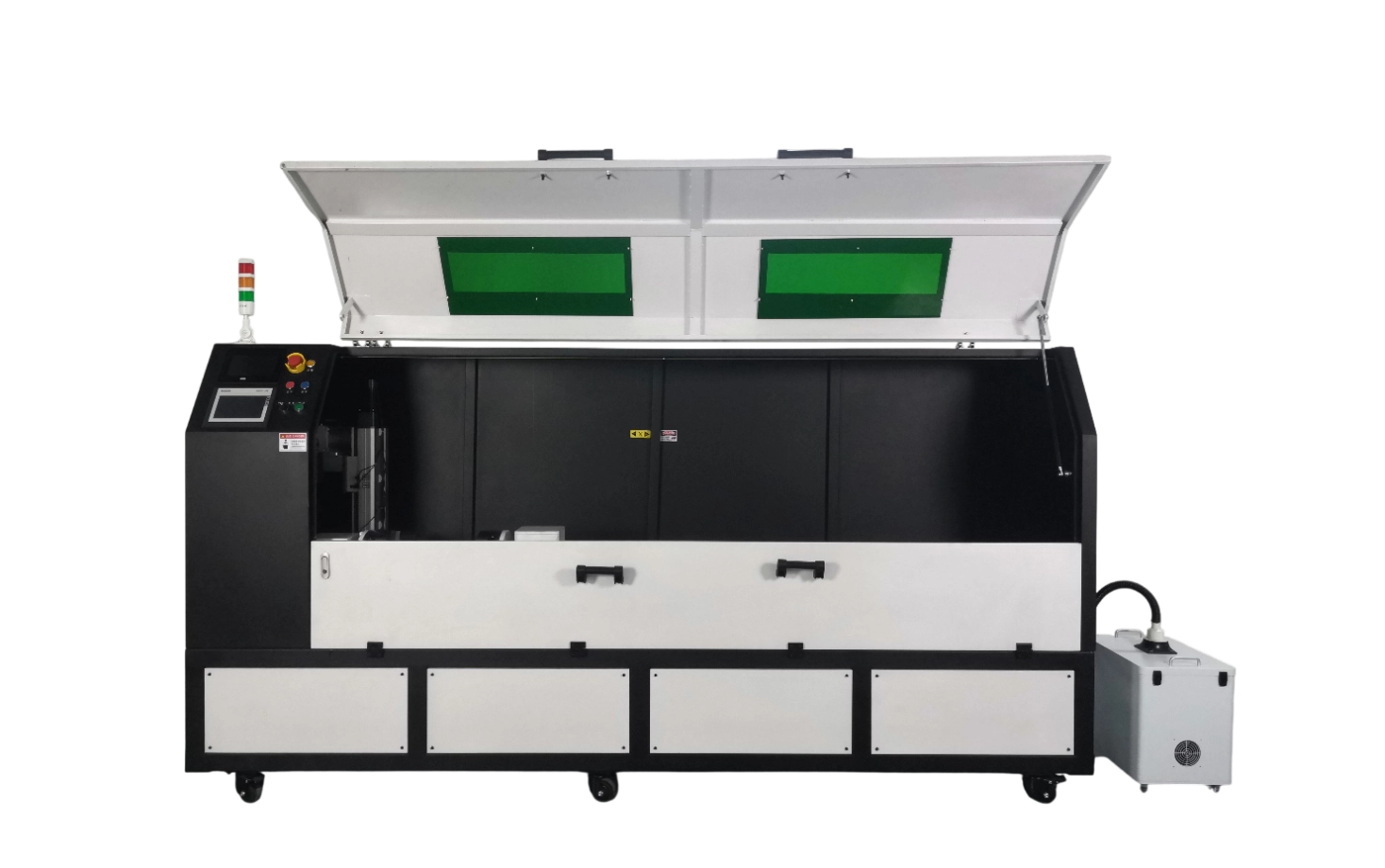
The ink blocking the cells affects the printing quality, which is a pain point that the flexo printing industry has been difficult to solve. The anilox rollers that have been working for a long time, in addition to part of the damage caused by wear and tear, will also be scrapped due to the reduced cell volume, which affects the printing efficiency and quality. Deep cleaning at least 1-2 times a year will restore the anilox roller as new, prolong the service life of the anilox roller, improve printing quality, and reduce ink loss.
Achieving stable, high-quality laser cutting depends on more than just power, speed, or focus settings. One of the most easily overlooked yet crucial factors is coaxial alignment—the alignment of the laser beam center with the nozzle center. Poor coaxial alignment can lead to inconsistent cuts, excessive slag, kerf offset, and even frequent nozzle damage.
The wavelength of a laser describes the spatial frequency of the emitted light wave. The optimal wavelength for a particular use case depends largely on the application. In material processing, different materials have unique wavelength absorption characteristics, leading to different interactions with the material. Similarly, atmospheric absorption and interference affect certain wavelengths differently in remote sensing, and in medical laser applications, different skin tones absorb certain wavelengths differently. Due to their smaller focused spot size, shorter-wavelength lasers and laser optics have advantages in creating small, precise features with minimal peripheral heating. However, they are typically more expensive and more susceptible to damage compared to longer-wavelength lasers.
Laser cleaning technology was first applied to the cleaning and maintenance of cultural relics in the 1970s, following the invention of the laser. It represents an effective attempt and successful application of advanced laser technology in the protection of traditional cultural heritage. Compared with traditional methods such as mechanical, chemical, and ultrasonic cleaning, laser cleaning offers unique advantages, including selectivity in target application, environmental friendliness, non-contact nature, and high controllability, gradually becoming a crucial means of cleaning, restoring, and protecting cultural relics. After decades of development, modern laser cleaning technology has achieved a technological leap from nanosecond to femtosecond ultrashort pulses, with cleaning precision reaching the micrometer level. It has become a "precision scalpel" in the field of modern cultural relic protection, and laser cleaning trials have begun on actual cultural relics such as stone artif


